

Official opening of the 19th ‘Voice of Reason’ International Literary Festival
3 October 2026 from 5.30 p.m. at the Canetti House
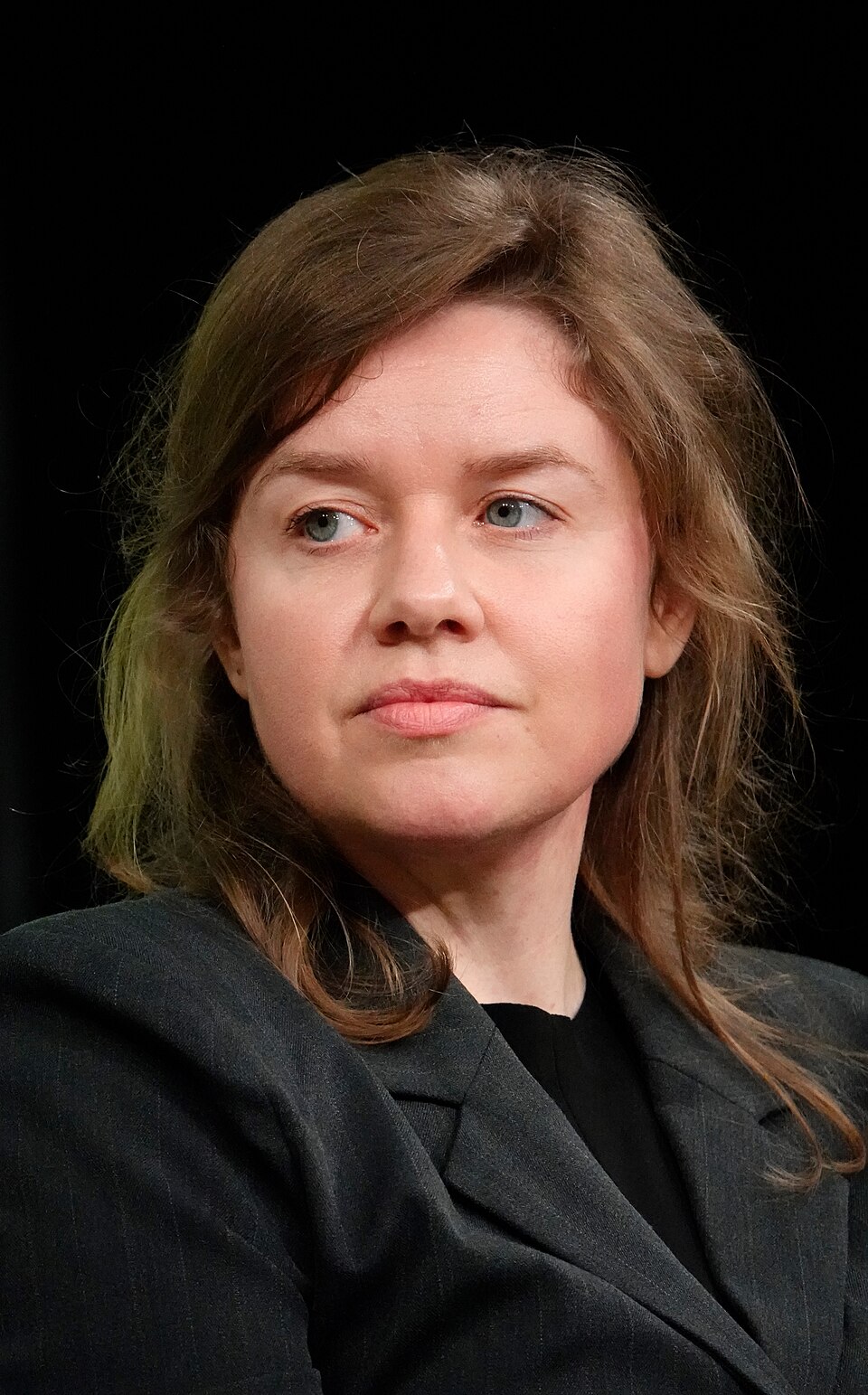
Saturday 3 October
6.00 p.m., Canetti-House
Immediately following the festival’s official opening, there will be an event at which the audience will have the opportunity to meet Elli Unruh and learn about her book “Fische in Trüben”. Born in Kazakhstan in 1987 into a Mennonite family, she was taken to Germany by her parents that very same year – far away from the steppes, the Gulag and the collective trauma of the Soviet Germans. Today she works at the renowned Archive for German Literature in Marbach and draws on the power of archives and family memories to bring life into a lost world. Elli Unruh offers a first glimpse into the book’s content in an interview with Detelina Kamenova.
DK Ms. Unruh, you were born in Kazakhstan, but your family emigrated to Germany when you were still a baby. To what extent is the story in “Fische im Trüben” based on the direct memories of your grandparents and parents?
EU The story is set in the Soviet Union in the 1970s. As I have no personal memories of that time or place, I had to rely on my family’s stories and accounts. I’ve known these stories since my childhood and over the years they have become sort of a secondary memory. At the same time, my own interpretation always plays a part in the selection and compilation – for example, the decision as to which minor encounter or brief incident might replace a larger conflict. To be able to do that, I obviously first had to observe or experience such conflict myself. In that sense, the book is a mixture of stories passed down through the generations, my own observations and the questions I have always asked myself. Some of these questions arise independently from any specific historical context in which people interact with one another or, as a group, come into conflict with a larger system.
DK The Mennonites traditionally commit themselves to absolute pacifism, which often leads to new waves of emigration. Do you believe that this philosophy makes them the perfect victims of repressive regimes, or, on the contrary, that it is their strongest shield for survival?
EU I think both can be true. During the civil war that followed the Russian Revolution, there were attempts of self-defence, but they came too late and were too weak. Other groups of German origin stood no chance as well. Hence, I wouldn’t say that this was a matter exclusively concerning people of the Mennonite faith. On the flip side, many Mennonites had already fled the Soviet Union in time and made it as far as Canada or various countries in South America. As soon as it was possible, they sent parcels, tried to help their relatives, and tried to shed light on the plight of those left behind in the Soviet Union. So, one could say that their pacifism, as part of their religious convictions, made the resettlement more bearable from the outset and strengthened their bonds. In fact, it was something that helped them to stick together and stay alive.
DK You use a mixture of German and Russian words in your novel, as well as the traditional Plautdietsch dialect. How did this specific style come about, and was it difficult to translate the oral family tradition into the language of fiction?
EU This combination is still spoken today; it is also the language in which I was told these stories. That’s why it felt wrong to leave out what – at least for me – makes the stories and sentences so special. I tested the text and showed it to people who weren’t familiar with the linguistic background. They said it seemed strange, but appealing. The next step was to ensure it didn’t come across as a parody – as if someone was imitating a particular way of speaking just to make fun of it. Hence, it was important not to overdo it. I used the words I liked and that I used quite naturally when speaking to my family. Another challenge was that this particular language has no standardised written form. Therefore, I had to find a consistent way of spelling the words without making the text seem arbitrary or confusing.
DK You opted for a non-linear, episodic structure rather than a traditional family saga. Why did you choose to tell the story of the trauma of deportation and life in isolation in this fragmentary way?
EU I didn’t want to write a story about the origins of the trauma, but rather about how it continues to affect people in subsequent generations. I wanted to show how helpless they can feel and how they live with the constant fear that something terrible might happen again. How are you supposed to build a life for yourself when everything seems uncertain?
None of the protagonists I described are the sort of people who would talk about themselves, certainly not without being asked. Quite the opposite – silence as a survival strategy is a key theme in the book. Since they won’t not tell their own stories, I had to tell them on their behalf. But I also wanted to preserve their secrets as individuals, whilst they represent their generation. That is why only when taken together, they form the complete picture.
DK You work at the renowned Archive for German Literature in Marbach. To what extent has your daily engagement with historical manuscripts and institutional archives shaped your personal writing process and the “Protocols of Everyday Life”?
EU Working in the archive has probably made me much more attentive to things that are easily overlooked. An original document, a record, a handwritten note, a brief account of an ordinary day – none of these seems particularly important for the moment. And yet, decades or centuries later, they can become a missing piece of a puzzle, something that sheds light on how people lived, what they cared about, or simply how they behaved.
Of course, the archive cannot preserve everything. This makes the decision of what to keep and what to discard a peculiar kind of responsibility. My colleagues must think beyond their own time – not just in years, but in decades and sometimes even much further into the future. We do not know what future generations will want to know about us. That is why we can only be mindful and try to preserve what might otherwise disappear.
I believe that writing works in a similar way. We are constantly moving through time; we live, we die, and most of what happens to us vanishes without a trace. Writing is an attempt to leave something behind – not necessarily an answer or something important, but a record that says: this happened, I was here, I noticed it. I used to ask myself: why should I preserve, document or record things when after all everything fades away anyway? That won’t stop the passage of time. And I don’t have an answer to that. I just know that I don’t want to remain silent about it.
DK The title “Fische im Trüben” conveys a sense of confusion, chaos and the attempt to survive in an opaque environment. The nomination for the Leipzig Book Fair Prize in 2026 has shown that the theme resonates strongly today. What is your message to today’s readers, who are once again living in a world of geopolitical uncertainty?
EU I wrote in the present tense because it was important to me not to write about a long past time – about something that happened years ago and has already been recounted in many different narratives. I wanted to make the experience as tangible as possible, so that the reader can truly immerse themselves in that time and see the circumstances from the inside. Perhaps this is also a call not to always view migration solely from our present-day perspective. When we know that someone has fled, it’s easy to look back and ask why they left or simply didn’t stay. But for someone who has never had to flee or leave their country, it can be difficult to imagine the circumstances that make staying impossible. Perhaps a historical perspective can create a little distance from our own assumptions whilst, at the same time, bringing us very close to the experience known as displacement.
DK How does the book strike a balance between the European context (symbolised by the Trakehner horses) and the motive of the Asian steppes (the Kazakh orchards)? What inner conflict within the characters does this geographical and cultural layering reveal?
EU The geographical contrast may represent more than just a comparison of Europe and Asia. It can also be understood as a contrast between different forms of autonomy. In the Mennonite mother colonies, and – at least initially – in the horse-breeding communities of the North Caucasus, a high degree of self-sufficiency was possible within the existing legal framework. In Kazakhstan, by contrast, maintaining such autonomy appears to require the characters to bend or circumvent the law. This reveals an internal conflict between the Mennonite ideal of righteousness and their equally strong desire for self-governance and independence. Thus, the geographical and cultural separation reflects the underlying tension between communal autonomy and increasing state control.
DK Survival as an art: if “Fish in Turbid Waters” depicts people who exploit the chaos, where then do the Trakehner horses and the apple orchards stand – are they victims of this environment, or do they embody alternative ways of life outside it?
EU No, neither the fish nor the people are exploiting the chaos. Rather, they are forced to find their way in the chaos into which others have thrown them. The murkiness makes survival difficult, but it also offers them the opportunity to hide within it. In religious groups such as Mennonite communities, family ties and social expectations strongly shape the way a person thinks and acts. They influence not only personal faith, but also moral views, life choices and everyday behaviour. When belonging to the group is highly valued, individual freedom may take a back seat to expectations of cohesion and conformity. However, if this structure breaks down, the rupture can also be liberating for the individual: it can create space to rethink one’s own convictions, values and identity. But that is a topic for another time.