

OCTOBER 4th, 2026, FROM 5.30 P.M. AT THE CANETTI HOUSE
SCHWIMMEN IN DER TINTE (SWIMMING IN THE INK)
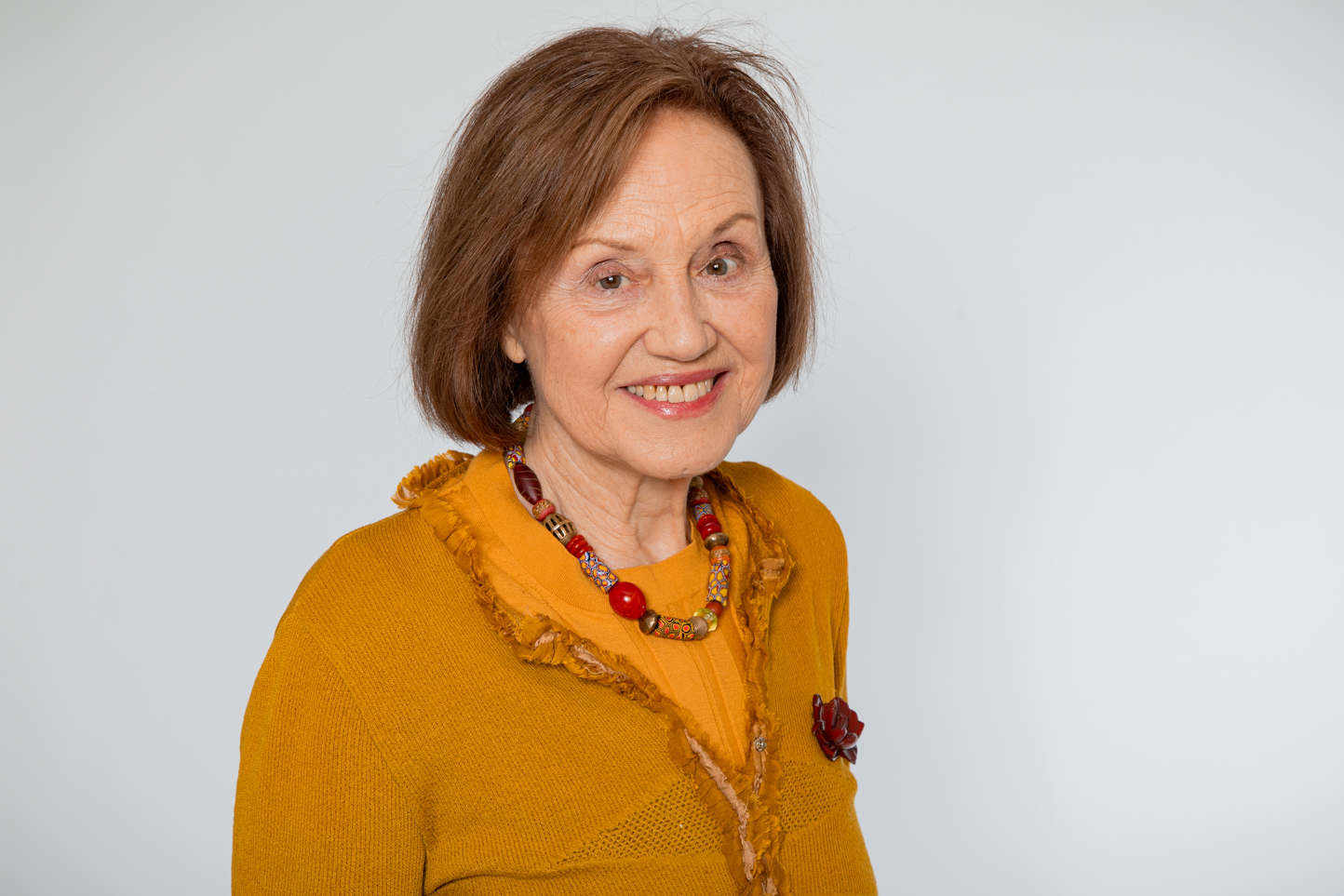
This is the fascinating title of Rumiana Ebert’s book, which we will be presenting on the 4th of October. She is a renowned Bulgarian and German poet, writer, essayist and translator who has been combining science with literature for decades. She is a unique example of an artist with a PhD in chemistry whose poetic voice is highly regarded in the German-speaking world. Rumiana Ebert answered Detelina Kamenova’s questions succinctly. In the interview, Ms. Ebert’s authentic spelling and style of expression in Bulgarian have been retained.
DK Ms. Ebert, you hold a PhD in chemistry, a degree in musicology and are an established writer. How do these three worlds – which at first sight seem so different – interact in the creation of literature?
RE I am a chemist, and my professor always used to say: “Once a doctoral thesis is finished and complete, it is short”. As I come from a background in poetry, my writing is also short, and not everything can be explained. As for musicology: musicians who have not completed a degree in music, or who have failed to do so, often study musicology, even though there are not many job opportunities for them in that field.
DK You left Bulgaria in 1966. How did that come about, and how long did it take to feel like you were part of a different world?
RE When I was finally able to come to Munich (it was an odyssey and I’d rather not go into in detail), I spoke German thanks to my mother, who was a German studies scholar and taught German, so my language test went well. I’d already been studying in Sofia, I was young and didn’t have high expectations, so I quickly found a double room in a student residence where there were abandoned bicycles, and I took one. My mother also helped me find a small scholarship, which enabled me to make ends meet. That was to her credit, because in a period after 1944 that was very difficult for the German language, she taught German even though very few pupils wanted to learn it – they preferred French – and I believe it was the Goethe-Institut that helped her with that.
DK You have been living in Germany for decades and you write in two languages. How do you manage to balance the two cultures and the two languages? Would you say that they coexist in harmony?
RE I have never written in Bulgarian; I have translated Georgi Markov into Bulgarian, as well as poems by Mirela Ivanova and others, but I wrote poems in Germany whilst I was working at the Institute of Forensic Medicine and the work there was agonising.
DK The book you will be presenting at the Literature Festival in Ruse is described as a novel with autobiographical elements. How blurred is the line between your personal history and the fates of your literary characters?
RE Just the first two chapters are perhaps 70 to 80 percent autobiographical. They deal with my childhood, Stalinism, the Hungarian Uprising and my father’s unemployment. I deliberately wrote them in the style of a school essay, meaning they are written from the perspective of a little girl aged between 5 and 13. The remaining chapters are fictional. But I am also present within the various characters. I was researching. If some people think it is autobiographical, then I have done my job well and successfully. Or as Gustave Flaubert said: ‘Madame Bovary, that is me’, and he cried when she took her own life.
DK What does the title “Swimming in the Ink” symbolise – the difficulty of writing, catharsis, or the will to survive between documents and foreign words?
RE In German, “Schwimmen in der Tinte” has a double meaning. It recalls the expression “Ich sitze in der Tinte”, which means something like “I’m in trouble, I’ve made a mess of things”. There’s no equivalent in other languages, but your guess is correct: the will to survive. One has not gone under but is staying afloat – also a metaphor for the process of writing and remembering. “Ink” stands for documentation, for capturing something fleeting, a painful past, whilst “swimming” symbolises the effort not to go under in this mass of one’s own history or someone else’s bureaucracy.
DK In your novel, your characters arrive in East Berlin on August 12th 1961 – just one day before the Berlin Wall was built. How might their fate have unfolded differently if they’d reached this part of Germany earlier? Or if they’d arrived in the western part?
RE On August 13th 1961, it would probably have been very difficult to find one’s way around West Berlin, as the focus would have been exclusively on the East Germans and nobody would have given a thought to the other nations.
DK Even though the story is set in the middle of the last century, the theme of fleeing one’s home and the search for freedom is extremely relevant today. What differences do you see in the path to integration into a foreign country for today’s refugees – and also for economic and social migrants – compared to the one you yourself went through?
RE Yes, the issue of fleeing one’s home is very relevant. Perhaps Germany has become accustomed to it, and there is support from institutions and churches, as well as small accommodation facilities or tents. People are used to foreigners. On the other hand, it is more difficult because there are far more of them than there were in my days – back then, it was no problem to find work, and very few people knew that support was available. But the issue remains as relevant as ever.